Introduction
Artificial Intelligence (AI) is rapidly transforming how the world works—and Nepal is no exception. From startups in Kathmandu to research labs and government platforms, AI is slowly becoming part of Nepal’s digital transformation journey.
But with this growth comes a critical question:
👉 Are we building AI responsibly in Nepal?
As AI begins to influence decision-making in finance, healthcare, governance, and media, ethical concerns like privacy, bias, and accountability are becoming increasingly important.
This article explores the ethical implications of AI in Nepal, backed by real examples, local context, and actionable insights.
The Rise of AI in Nepal
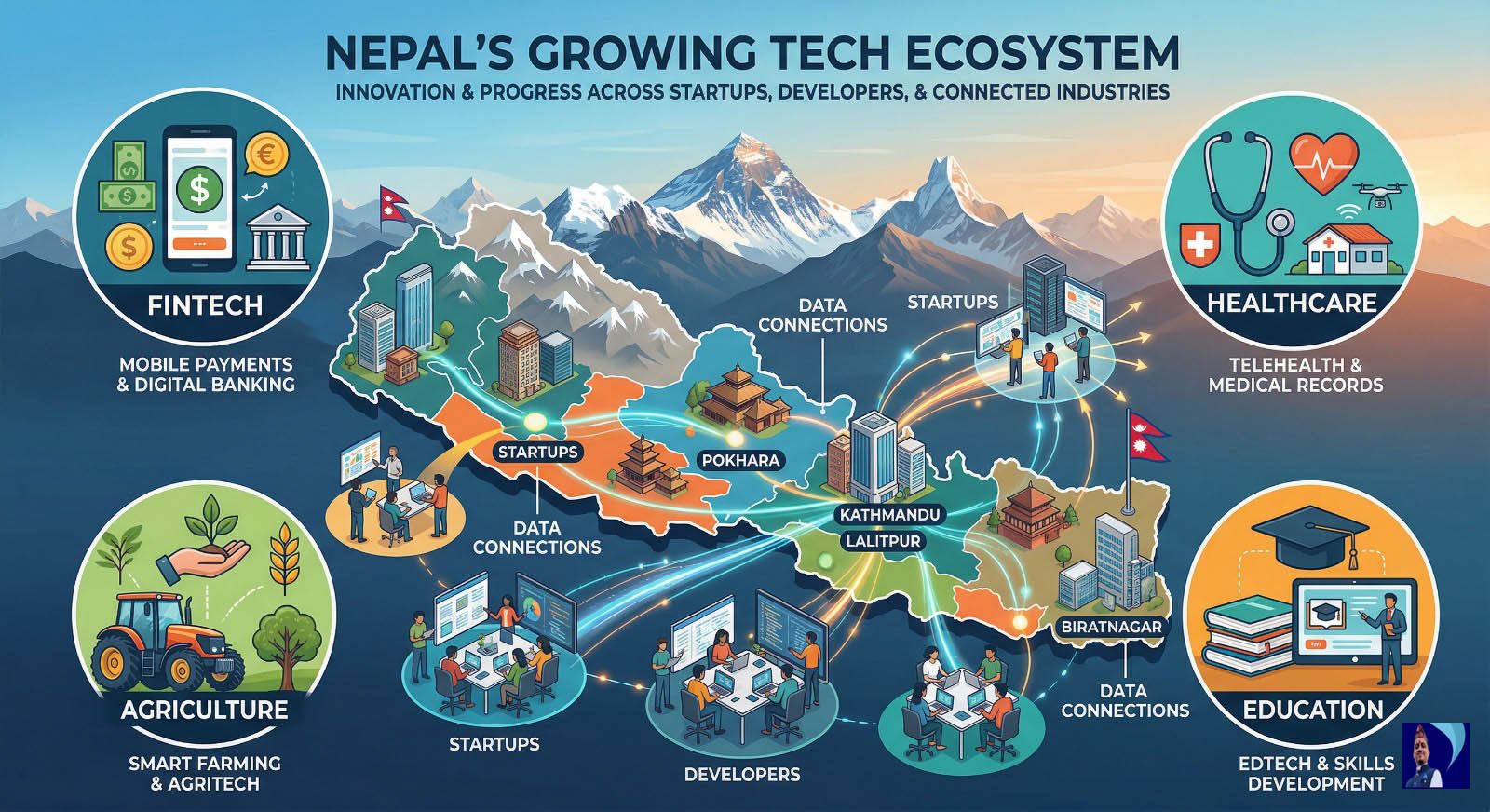
Nepal’s tech ecosystem is evolving quickly, driven by:
A growing IT outsourcing industry
Increased internet and smartphone penetration
A young, tech-savvy population
Organizations like NAAMII are leading AI research in Nepal, working on:
Medical imaging (e.g., fetal ultrasound analysis)
Disaster response technologies
AI for social good
At the same time, companies like Paaila Technology have developed innovations like the “Ginger” robot, showcasing Nepal’s potential in robotics and AI.
⚖️ Key Ethical Issues in AI Adoption
🔐 1. Data Privacy & Surveillance

AI systems depend on large amounts of data—but Nepal still lacks strong data protection laws.
Risks include:
Unauthorized data collection
Weak user consent mechanisms
Misuse of personal information
Platforms like Nagarik App collect citizen data, making data governance and security a top priority.
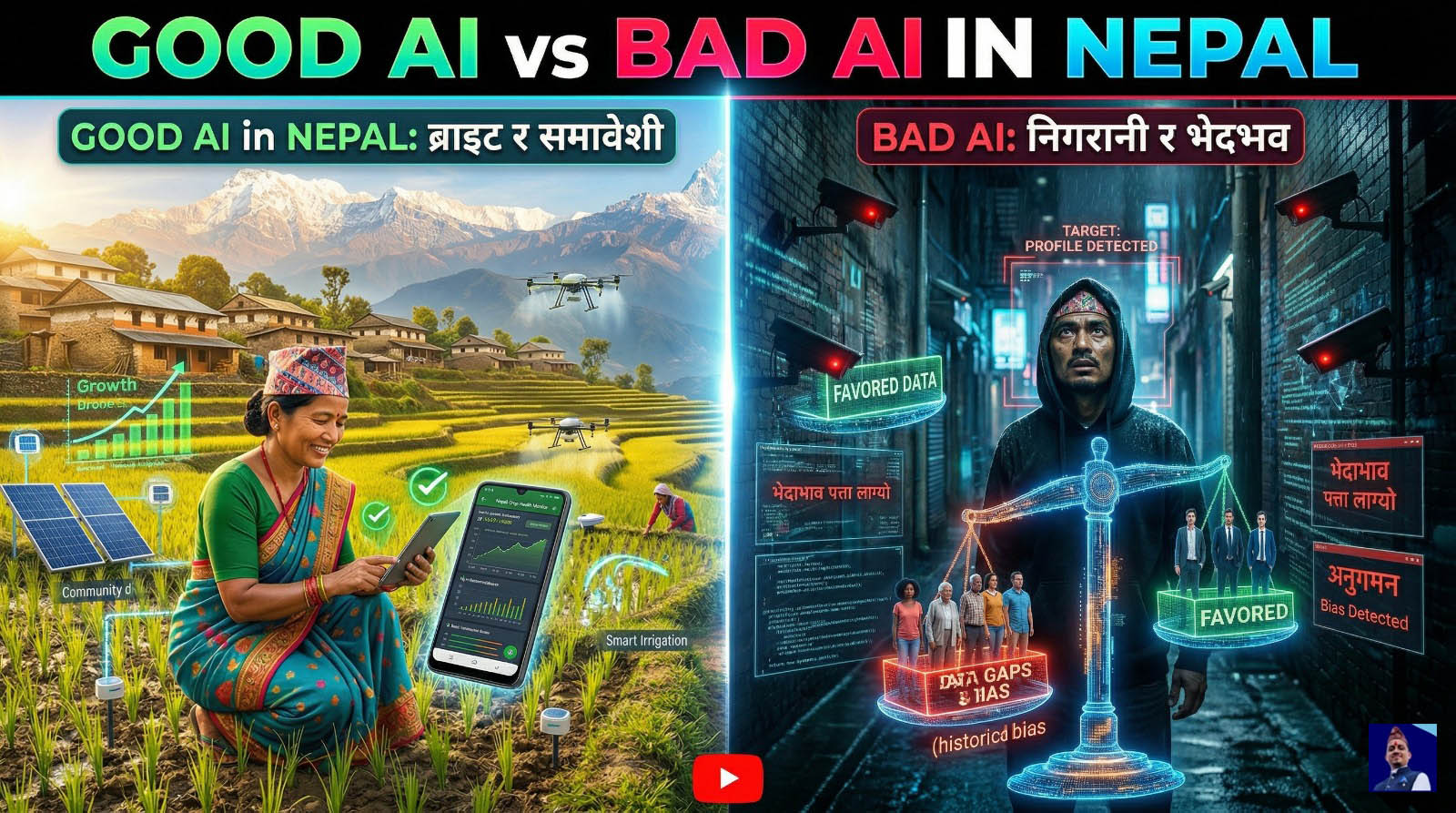
⚖️ 2. Algorithmic Bias & Fairness

AI systems can unintentionally discriminate if trained on biased or limited datasets.
In Nepal, this can lead to:
Financial exclusion of rural populations
Language bias (Nepali vs local dialects)
Unfair hiring algorithms
👉 Example: AI tools trained mostly on English or urban data may fail to represent rural Nepali realities.
🤖 3. Job Displacement & Economic Inequality
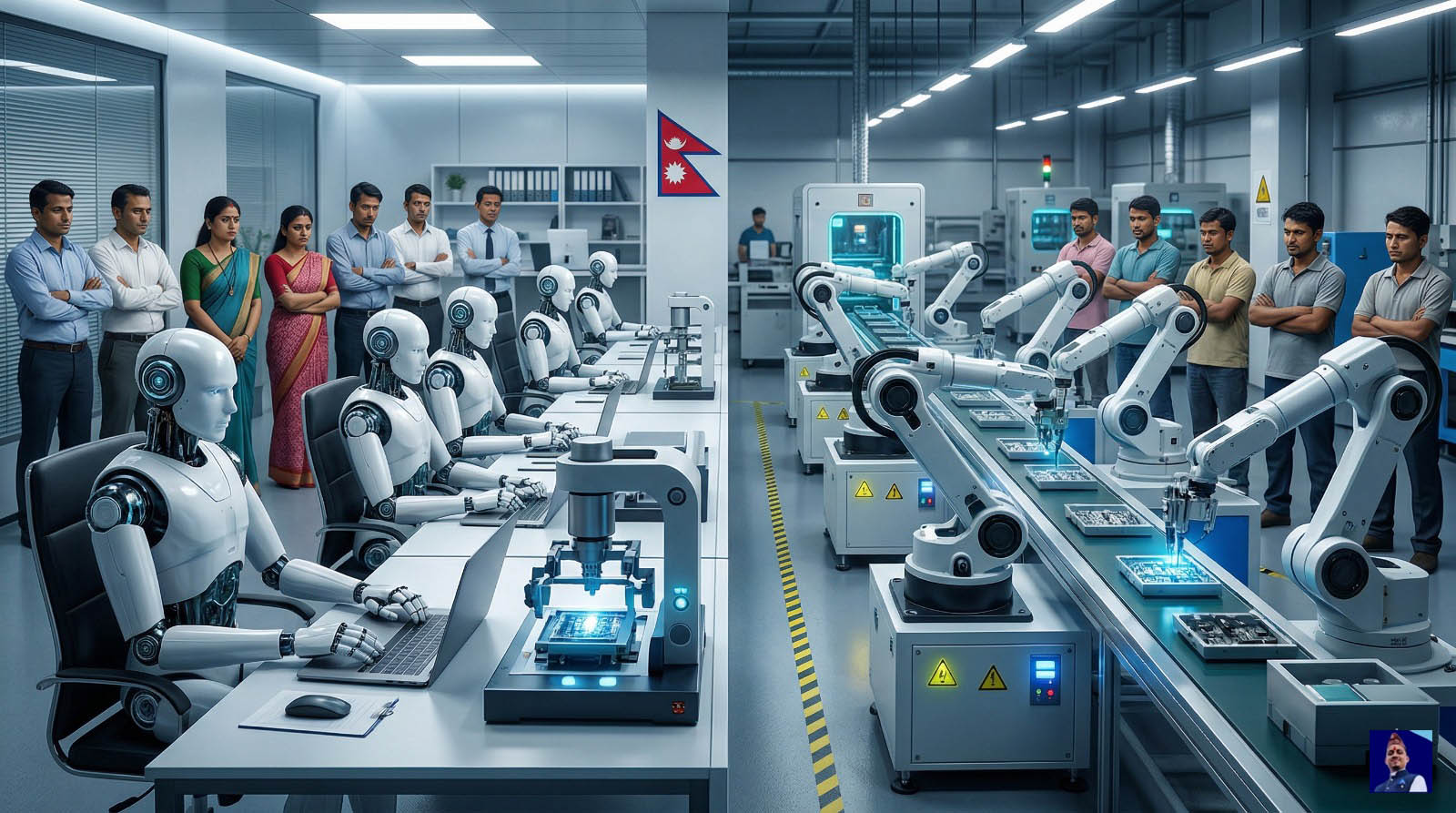
Automation is a double-edged sword.
Risks:
Replacement of low-skilled jobs
Increased income inequality
Opportunities:
Creation of new tech jobs
Growth in AI-related careers
👉 The challenge is reskilling Nepal’s workforce fast enough.
📰 4. Misinformation & AI-Generated Content

AI can generate highly realistic content—text, images, even videos.
This increases risks of:
Fake news
Deepfakes
Political manipulation
For a developing digital society like Nepal, this is a serious concern.
🧾 5. Accountability & Transparency
When AI systems make decisions, accountability becomes unclear:
Who is responsible for errors?
Can decisions be explained?
Most AI systems today operate as “black boxes”, which reduces trust.
🚧 Challenges Unique to Nepal
नेपालमा AI विकास गर्दा केही विशेष चुनौतीहरू छन्:
1. Limited Infrastructure
Lack of high-performance computing
Limited cloud adoption
2. Data Scarcity
Few localized datasets
Lack of Nepali language AI training data
3. Skill Gap
Shortage of AI engineers and researchers
4. Policy Gaps
Nepal is still developing frameworks like the
National AI Policy 2025
👉 Implementation and enforcement remain key challenges.
🌱 Opportunities for Ethical AI in Nepal
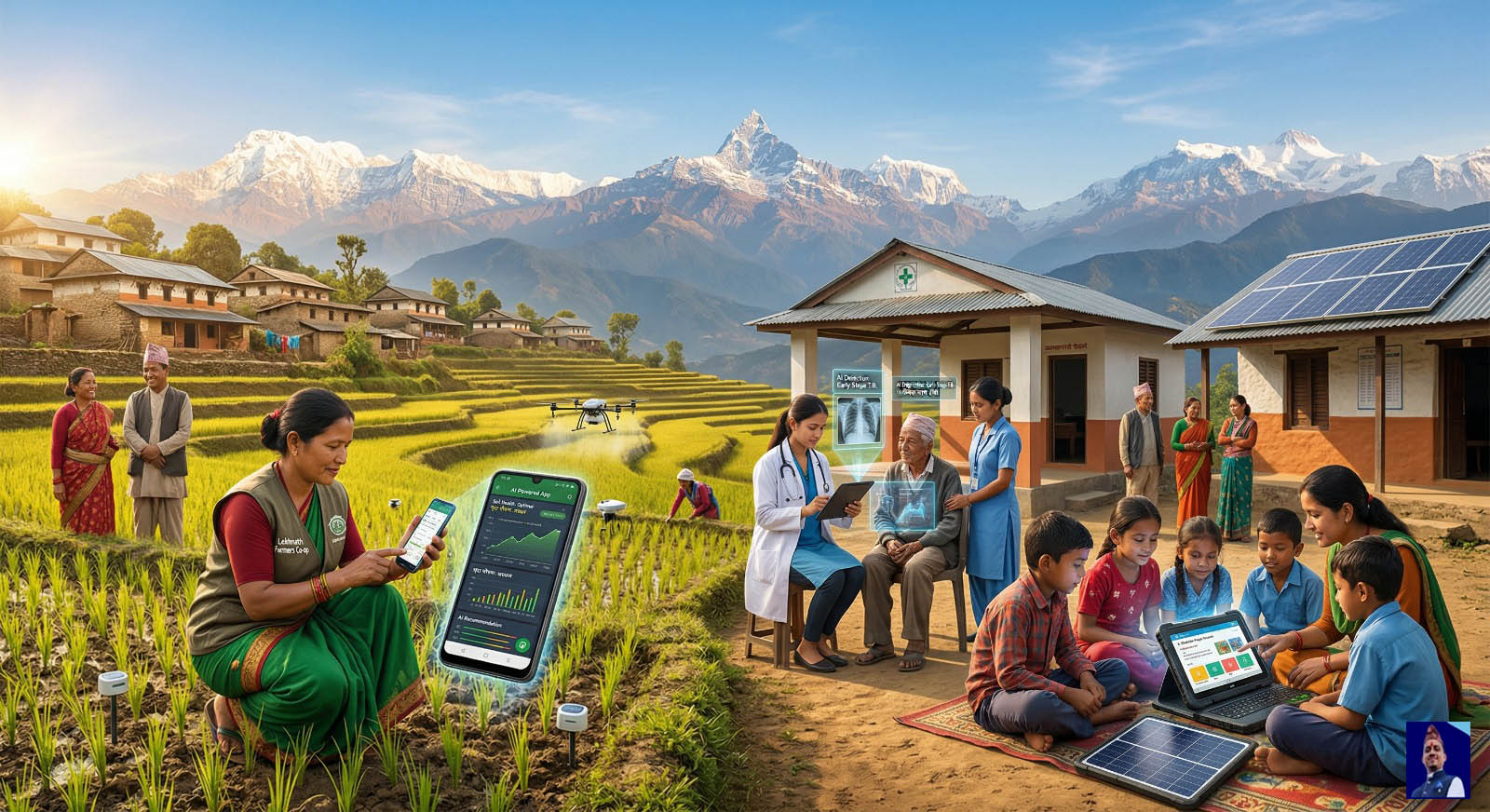
Despite challenges, Nepal has a unique advantage—it can build AI the right way from the start.
💡 1. AI for Social Good
Healthcare diagnostics in rural areas
Smart agriculture solutions
Disaster prediction (earthquakes, floods)
🚀 2. Startup Innovation
Local startups can build:
Context-aware AI solutions
Affordable technologies for Nepali users
🌍 3. Inclusive AI Development
Nepal can lead in:
Multilingual AI systems
Inclusive datasets
Community-focused innovation
🌐 Global Lessons Nepal Can Adopt
Nepal can learn from global AI frameworks:
UNESCO AI Ethics Guidelines
EU AI Act (risk-based regulation)
OECD AI Principles
These emphasize:
Human rights
Transparency
Fairness
Accountability
👉 The key is adapting—not copying—these frameworks.
🛠️ Actionable Recommendations
🏛️ For Government
Enforce strong data protection laws
Invest in AI education & research
Implement AI policies effectively
🏢 For Startups & Businesses
Build ethical AI from day one
Be transparent with users
Protect user data
👨💻 For Developers
Use diverse and unbiased datasets
Build explainable AI systems
Regularly audit algorithms
👥 For Users
Stay aware of AI risks
Verify online information
Protect personal data
🔮 Future Outlook

नेपालको AI भविष्य अझै शुरुवाती चरणमा छ—तर सम्भावना धेरै ठूलो छ।
Unlike developed countries dealing with AI consequences, Nepal has the opportunity to:
✅Learn from global mistakes
✅ Build ethical systems early
✅ Focus on inclusivity and fairness
🧠 Conclusion
AI is not just a technological shift—it is a societal transformation.
For Nepal, the real question is not:
👉 “How fast can we adopt AI?”
But rather:
👉 “How responsibly can we build it?”
By focusing on ethics, inclusivity, and accountability, Nepal can create an AI ecosystem that truly benefits its people.