Introduction: Why Death Still Terrifies Modern Humanity
Despite living in an age of advanced medicine and scientific progress, death remains one of the most misunderstood realities of human life. Modern culture treats death as either a tragedy or a taboo. It is concealed behind hospital curtains, mitigated by courteous expressions, or articulated in clinical terminology.
But no matter how far technology advances, one truth remains unchanged: death is inevitable.
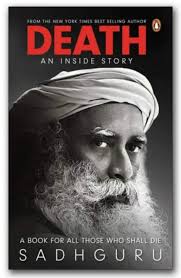
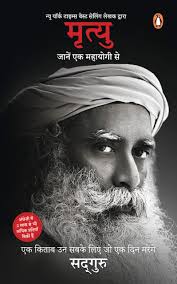
In his deeply impactful book Death: An Inside Story, yogi and mystic Sadhguru Jaggi Vasudev challenges society’s fear-based relationship with death. He argues that death is not the enemy of life. It is not the opposite of life. It is simply the completion of a process.
The book works like a spiritual manual—an attempt to prepare the reader for the one experience no human being can escape.
If you are searching for a Death: An Inside Story summary, this article offers a detailed breakdown of the book’s most important ideas, including Sadhguru’s explanations of:
- what death actually is
- how the life force leaves the body
- karma and reincarnation
- ghosts and disembodied beings
- suicide vs Mahasamadhi
- how to assist the dying
- how to handle grief wisely
This is not a typical religious text. It is a blend of yogic science, metaphysical logic, and Sadhguru’s experiential insight.
1. Death is Not the Opposite of Life (Sadhguru’s Core Message)
One of the most repeated messages in Death: An Inside Story is this:
Death is not the opposite of life. It is the opposite of birth.
This shift in perspective is powerful. Most people treat death as an ending, but Sadhguru insists it is only the ending of the physical body—not the ending of existence itself.
According to him, our fear of death comes from a single problem:
We are too identified with the body.
Humans believe “I am the body.”
So when the body ends, the mind believes “I end.”
But yogic tradition views the body as a temporary instrument, not the self.
The Breath Example: Life and Death Every Moment
Sadhguru uses a simple daily reality to explain death:
- Inhalation is life
- Exhalation is death
If you resist exhalation, you will suffer.
In the same way, resisting death creates suffering. Death itself is not the tragedy—resistance is.
2. The Bubble Analogy: Understanding Death Through Yogic Metaphor
One of the most memorable sections of the book is Sadhguru’s bubble analogy.
He compares human life to a soap bubble:
- The bubble’s skin is the physical body
- The air inside is life energy
- The structure is held by karmic memory
When death happens, the bubble bursts.
But the air does not disappear. It merges into the larger atmosphere.
This is Sadhguru’s way of saying:
Life does not “go” anywhere. It simply dissolves back into the cosmic pool.
This analogy removes the drama of death. It frames it as a natural merging, not a violent destruction.
3. Death as the Ultimate Relaxation (Not Suffering)
In modern thinking, death is associated with pain and loss. But Sadhguru claims that death itself is a profound relaxation.
Life requires continuous tension:
- the heart beating
- the lungs working
- digestion happening
- muscles holding posture
- mind producing thought
The body is a machine running constantly.
Death, on the other hand, is the release of that tension.
Sadhguru says the suffering people associate with death is often not death, but:
- fear
- emotional attachment
- anxiety about unfinished life
- resistance to letting go
In other words, the mental state shapes the death experience.
4. Death is a Process, Not an Instant Event
One of the most fascinating elements in this Sadhguru death book review is the technical explanation of how death unfolds.
Sadhguru insists death is not a single moment.
It is a process where different layers of life force withdraw from the body.
This is where the yogic concept of Pancha Pranas (Five Dimensions of Prana) comes in.
The Five Pranas (Pancha Pranas) and Their Withdrawal
According to Sadhguru, the life force exits in stages:
1) Samana Vayu (Body Temperature)
- Leaves within 21–24 minutes
- The body begins cooling
2) Prana Vayu (Breath and Thought)
- Leaves within 48–90 minutes
- Respiration stops
- mental processes disconnect
3) Udana Vayu (Buoyancy and Sensation)
- Leaves within 6–12 hours
- the body loses lightness and becomes heavy
4) Apana Vayu (Lower functions / Excretion)
- Leaves within 8–18 hours
- sensory and lower functions shut down
5) Vyana Vayu (Preservation Energy)
- Can take up to 11–14 days
- the final energetic dissolution
This is why many traditional cultures do not rush rituals immediately after death.
From yogic science, the being may still be partially connected for days.
5. Exit Points: How the Soul Leaves the Body
Another key concept in Death: An Inside Story summary is the idea of exit points.
Sadhguru claims the quality of death depends on where the life force exits.
In yogic understanding, the body has multiple “exit doors” aligned with chakras.
- A fearful person may exit through the lower chakra (Muladhara)
- A spiritually refined person may exit through higher centers
- A yogi may exit through Sahasrara (crown chakra)
Exiting through the crown is associated with liberation or spiritual freedom.
This is why yogic practices focus on raising energy upward.
6. Suicide vs Mahasamadhi: A Spiritual Difference
One of the most serious discussions in the book is suicide.
Sadhguru does not romanticize suicide as freedom. He calls it a disastrous interruption of life.
Suicide According to Sadhguru
Sadhguru explains that suicide breaks the physical body while karmic momentum is still active.
The being still carries:
- prarabdha karma (karma allocated for this lifetime)
- unfulfilled tendencies
- strong mental impressions
But without a body, the being cannot express or exhaust these tendencies.
This creates a painful limbo state.
Sadhguru describes it as being trapped in intense desire and incompletion.
Mahasamadhi Meaning (Conscious Exit)
Mahasamadhi is the opposite of suicide.
It is not an escape from pain.
It is a conscious, voluntary dropping of the body after karmic cycles are complete.
A yogi who attains Mahasamadhi:
- does not damage the body
- leaves consciously
- dissolves into cosmic existence
Sadhguru describes this as the highest form of freedom.
In many traditions, Mahasamadhi is considered the ultimate spiritual accomplishment.
7. Life After Death According to Sadhguru
A major portion of the book deals with what happens after death.
This is where Sadhguru’s writing becomes both controversial and fascinating.
He claims that after death:
- the physical body is gone
- but the karmic structure continues
- tendencies remain active
- the being seeks a new form
This forms the basis of reincarnation.
What Are Ghosts? (Not What Movies Show)
Sadhguru defines ghosts not as demons but as disembodied beings.
A ghost is simply:
a being without a body, but with unfulfilled karmic tendencies.
Because they lack a physical form, they function purely through vasanas (tendencies). They are not “evil,” but they can be unstable or confused.
They may linger because they cannot immediately find a new womb suitable for their karmic structure.
This explanation is more psychological and karmic than supernatural.
8. Reincarnation and Karma: How Rebirth Happens
Sadhguru explains reincarnation as a natural process driven by karmic memory.
In his view, reincarnation is not a spiritual reward system.
It is a continuation of unfinished patterns.
The being gravitates toward:
- parents
- environment
- womb
that match its karmic tendencies.
It is like a magnet pulling you toward the next suitable experience.
The “Soulmate” Myth (Sadhguru’s View)
One of the most surprising sections is Sadhguru’s dismissal of romantic reincarnation beliefs.
He says most relationships are:
- physical
- emotional
- psychological
They dissolve after death because they are body-based.
The only relationship that may continue is an energy-based connection between a Master and disciple.
This is a key part of Sadhguru’s teaching: spiritual bonds are deeper than social bonds.
9. The Science of Rituals: Why Death Ceremonies Matter
Sadhguru does not treat rituals as blind superstition.
He treats them as energetic technology.
He argues that death rituals exist because the dead being may still be partially connected.
Rituals are designed to help the being transition smoothly.
Cremation vs Burial (Sadhguru’s Strong Opinion)
Sadhguru emphasizes cremation for natural death.
He says cremation sends a clear message:
the body is finished.
It prevents the being from hovering around its old form.
This is one reason cremation is dominant in many Eastern traditions.
Burial, in his view, keeps the body form intact longer, potentially prolonging attachment.
Kalabhairava Karma and Other Practices
Sadhguru mentions rituals like Kalabhairava Karma as methods to dissolve karmic residues.
The idea is to “mop up” remaining tendencies so the being can move on.
Even if you don’t believe in the metaphysical claims, the psychological effect of ritual is real: it provides closure to the living.
10. How to Assist a Dying Person (Practical Yogic Guidance)
One of the most valuable parts of the book is its practical guidance.
Sadhguru says the atmosphere around a dying person matters enormously.
Create a Supportive Atmosphere
According to him, the dying person should ideally be in a calm, open space.
Avoid:
- loud crying
- emotional chaos
- intense attachment
Because these energies can disturb the person’s transition.
Body Alignment (North-South)
Sadhguru recommends placing the body North-South, with the head toward the North.
This is said to align with Earth’s magnetic field and facilitate a smoother exit.
This is a yogic belief rooted in energy-body science.
11. Understanding Grief: The Hidden Meaning of Pain
Sadhguru defines grief in a striking way:
Grief is a sense of incompleteness.
We suffer not because the person died, but because our emotional structure was built around their presence.
Their death leaves a gap in our identity.
He encourages people to realize:
- the relationship was physical and psychological
- once the body is gone, the relationship ends in that form
This is not meant to sound cold. It is meant to be liberating.
How to Handle Grief Wisely
Sadhguru suggests:
- accept the reality fully
- don’t deny death
- honor the person by living well
He believes the best tribute is not endless mourning, but conscious living.
12. The Book’s Deeper Message: Learn to Die by Learning to Live
The greatest teaching of Death: An Inside Story is not about death.
It is about awareness.
Sadhguru argues:
If you learn to live consciously, you will die gracefully.
If you live unconsciously, death will appear terrifying.
Because unconscious life creates attachment and confusion.
He repeatedly emphasizes that life is not about avoiding death, but about using life to transcend fear.
13. Why This Book Feels Different From Other Spiritual Books
Many spiritual books speak in poetic metaphors.
Sadhguru’s book feels like a manual.
It is practical, structured, and often technical.
It offers:
- spiritual logic
- yogic frameworks
- metaphysical claims
- real-life instructions
This is why it appeals not only to religious readers but also to curious modern minds.
Even skeptics may find it intellectually stimulating.
14. Who Should Read Death: An Inside Story?
This book is highly recommended if you are:
- afraid of death
- dealing with grief
- interested in reincarnation and karma
- exploring yogic spirituality
- searching for deeper meaning in life
- curious about Mahasamadhi and conscious dying
However, if you prefer purely scientific explanations, the book may feel speculative.
It is not a medical guide. It is a yogic interpretation of death.
15. Key Takeaways (Summary Points)
Here are the biggest lessons from this Death: An Inside Story summary:
- Death is not opposite of life, but opposite of birth
- Death is a transition, not annihilation
- Life force withdraws gradually through pranas
- Exit point influences the quality of death
- Suicide creates karmic incompletion and suffering
- Mahasamadhi is conscious liberation
- Ghosts are disembodied beings with strong tendencies
- Reincarnation is driven by karmic structure
- Rituals have energetic and psychological importance
- The best way to prepare for death is to live consciously
FAQs (SEO Booster Section)
What is Death: An Inside Story about?
It is a book by Sadhguru explaining death through yogic science, karma, reincarnation, and spiritual preparation.
Is Death: An Inside Story a religious book?
Not exactly. It is spiritual and yogic, but presented as experiential knowledge rather than religion.
What does Sadhguru say happens after death?
He says the body dies but karmic tendencies remain, leading to either disembodied existence or reincarnation.
What is Mahasamadhi according to Sadhguru?
Mahasamadhi is leaving the body consciously after completing karmic cycles, considered a form of liberation.
Why does Sadhguru recommend cremation?
He believes cremation helps the being detach quickly from the physical body and transition smoothly.
Final Reflection: Death is Not the End—It is a Doorway
The greatest gift of Death: An Inside Story is that it forces us to confront mortality without panic.
Sadhguru invites us to stop treating death like a monster.
Instead, he asks us to see it as a doorway—one that every being must pass through.
If we learn to live with awareness, death becomes not a disaster, but a completion.
As Sadhguru writes in essence:
If you are aware, you will see life and death are happening every moment.
And perhaps that is the true “inside story” of death:
it is not waiting at the end of life—it is woven into every breath you take.